Friday, September 27, 2013

The toughest HR decisions!

Greatest innovations, biggest corporate disasters and exemplary success tales have one thing in common – they all are born out of someone’s life’s toughest decisions. Professionally, it is about the lives of the people of the organisation, where the HR is often perceived as either an angel or Satan.r

Despite such a crucial role – that directly impacts the bottom line and thus productivity – interestingly, HR’s role as a decision-maker is largely undermined. It is usually not the initiator, and is perceived to be a support function to the decision-making authority or leadership. Where HR has become a crucial business driver, such as in leading organisations like IBM (where it has a strong voice), it has set several milestones. The organisation tries to synchronise its HR policies with the internal and external stimuli. However, companies can reserve a seat for HR at the table and value its decisions only after the relationship between HR and the ‘tangibles’ is well understood by them.

Focused HR plans and policies are a result of well-rounded discussions within an organisation, involving all the stakeholder. Such decisions enhance the core competencies and development of people, ultimately leading to the company’s growth. Today, a company cannot progress as long as it ignores the human capital. Still getting the best talent on board alone cannot serve any good till good decisions are in place to best utilise their skills and keep them engaged. Click here to read more..

Like us and read IIPM Think-Tank articles on facebook
IIPM Think-Tank
Business and Economy
The Sunday Indian
Prof. Arindam Chaudhuri
Prof. Rajita Chaudhuri
4ps Business and Marketing
The Human Factor
IIPM-The Indian Institute of Planning and Management
IIPM Info Page
IIPM - Best Post Graduate Business Management Institute India


Friday, August 02, 2013

No spring yet for Arab trade unions

On January 5, 2008, protests erupted in the southern region of Gafsa in Tunisia after the state-owned Phosphate Company announced the results of the recruitment competition, which was widely seen as fraudulent and rigged. The unlucky candidates who failed to secure employment at the factory as well as the representatives from the National Labour Union, the Union Generale des Travailleurs Tunisiens (UGTT) claimed that
the firm’s selection process was opaque and nepotistic. The demonstrations rapidly spread to include local residents as well as the relatives of miners injured or killed while working at the company. The government brutally cracked down on the protestors, leading to the death of two and imprisonment and torture of 300 others. Families of activists reported harassment by the authorities.

Tunisia is one of the countries with abysmal record of labour rights, but the Gafsa protests are indicative of restrictions on labour organisations throughout the region. In fact some West Asian countries do not even have formal labour rights such as the right to strike or form unions. While West Asia is not unique in its suppression of workers’ rights, the region’s robust authoritarian regimes make restrictions on labour organisation particularly severe by comparison to other regions. Click here to read more..

Like and read IIPM Think-Tank articles on facebook

Saturday, July 20, 2013

The right perspective

In a fast-growing corporate arena, it is essential that HR professionals adapt themselves to the changing demands of management, break away from traditional strategies and experiment with innovative methods and practices, to lay down the foundation of a productive workplace, said experts at the Annual HR Conclave organised by IIPM on August 11, 2012 at Hyderabad.

The conclave aimed at presenting the views of some of the eminent experts on ‘Competencies of a Successful HR Professional in Today’s Changing Scenario’. The conclave also saw a good participation of representatives from HSBC, Yes Bank, Rofus, Perfect Relations, Diebold, Google, The Golkonda Hotel, ManpowerGroup, Deloitte, GMR, Winzest, CBay, Netzworke, Shore Infotech and Dupont, to name some.

Mr. Debasis Chatterji, CEO, Netxcell Ltd, said that development of competencies for various functions of HR helps the management of an organisation with strategy execution. He also focused on business operations and how to be a good business partner, locally and globally.

Mr. Venkatesh Palabatla, chief HRO, GMR Group, emphasised on how to develop competencies to reduce cost of operations without losing talent. Ms. Rajita Singh, head HR, Broadridge Financial Solutions, focused mainly on how HR professionals should attain, retain and motivate employees. She also threw light on some new and innovative ideas that many organisations are incorporating today to motivate their employees. Click here to read more...

Read More IIPM Related Articles
Zee Business Best B-School Survey 2012
Prof. Arindam Chaudhuri's Session at IMA Indore
IIPM IN FINANCIAL TIMES, UK. FEATURE OF THE WEEK
IIPM strong hold on Placement : 10000 Students Placed in last 5 year
IIPM's Management Consulting Arm-Planman Consulting
Professor Arindam Chaudhuri - A Man For The Society....
IIPM: Indian Institute of Planning and Management
IIPM makes business education truly global
Management Guru Arindam Chaudhuri
Rajita Chaudhuri-The New Age Woman
IIPM B-School Facebook Page
IIPM Global Exposure
IIPM Best B School India
IIPM B-School Detail
IIPM Links
IIPM : The B-School with a Human Face

Monday, March 04, 2013

Training to be a life-long student

All the top achievers I know are life-long learners, looking for new skills, insights, and ideas. If they are not learning, they are not growing... not moving toward excellence, said Denis Waitley, one of America’s most respected authors, keynote lecturers and productivity consultants on high-performance human achievement.

Today’s highly competitive economy and business environment characterised by worldwide competition has influenced modern corporations in profound ways. Progressive organisations must achieve higher standards of productivity, quality, and effectiveness in order to survive, grow and excel in the new environment. Companies must adapt or change their business strategies to take into account the new realities of intense global and domestic competition. Corporate cultures, many of which were formed in a regulated monopolistic environment (for instance, Indian public sector) must be retooled for successfully facing the challenges of new environment.

Comprehending the situation David Ashton and Alan Felstead, faculty Cardiff School of Social Sciences, have said, “Regard the investment by an organisation in the skills of employees as a ‘litmus test’ for a change in the way they are managed. Learning and development carries the prospect of unleashing the potential that lies within all people, which allows employees to contribute their best, thereby becoming the best team leaders in their respective organisation.” Click here to read more..

Read More IIPM Related Articles
Zee Business Best B-School Survey 2012
Prof. Arindam Chaudhuri's Session at IMA Indore
IIPM IN FINANCIAL TIMES, UK. FEATURE OF THE WEEK
IIPM strong hold on Placement : 10000 Students Placed in last 5 year
IIPM's Management Consulting Arm-Planman Consulting
Professor Arindam Chaudhuri - A Man For The Society....
IIPM: Indian Institute of Planning and Management
IIPM makes business education truly global
Management Guru Arindam Chaudhuri
Rajita Chaudhuri-The New Age Woman
IIPM B-School Facebook Page
IIPM Global Exposure
IIPM Best B School India
IIPM B-School Detail
IIPM Links
IIPM : The B-School with a Human Face

Tuesday, February 05, 2013

Empower youth to scale greater height

In the 1970s, population explosion was considered detrimental to the growth of the country battling with meagre resources (read capital). The family planning drive, spearheaded by Sanjay Gandhi, was astonishingly supported by the middle class of that decade. That the drive led to the downfall of the Indira Gandhi government is another story.

Ironically, today, when the population of this country has doubled from what it was in 1970s (61.3 crore in 1975), it is being considered a boon. Piles of reports from the best consultancy firms in the world, including the often-quoted BCG report on BRIC, puts India in a special list of nations poised to leapfrog into the league of economic superpowers soon. The emphasis is increasingly on the growing young population.

One study quoted by Ruchir Sharma in his book, Breakout Nations, says that the average age of an Indian would be 29 years by 2020. Compare it with that of China (37) and Europe (49), clearly the mood of the nation and youth here is upbeat.

To cruise into the league of superpowers, it is not sufficient for India to just have the staggering population. The country needs to provide the right opportunities in education and impart the right skill sets to youth. The key to this growth is an educated mass. While the literacy rate may be close to 70 per cent in the country, the number of people who can actually read, write, add and subtract is abysmally low. Lack of teachers and inability to reach out to these millions (at an estimated 600 million people with less than 25 years of age) is going to burst this dream if something is not done quickly. Click here to read more...

Read More IIPM Related Articles
Zee Business Best B-School Survey 2012
Prof. Arindam Chaudhuri's Session at IMA Indore
IIPM IN FINANCIAL TIMES, UK. FEATURE OF THE WEEK
IIPM strong hold on Placement : 10000 Students Placed in last 5 year
IIPM's Management Consulting Arm-Planman Consulting
Professor Arindam Chaudhuri - A Man For The Society....
IIPM: Indian Institute of Planning and Management
IIPM makes business education truly global
Management Guru Arindam Chaudhuri
Rajita Chaudhuri-The New Age Woman
IIPM B-School Facebook Page
IIPM Global Exposure
IIPM Best B School India
IIPM B-School Detail
IIPM Links
IIPM : The B-School with a Human Face

Monday, January 14, 2013

India today stands amongst the league of nations which experienced a robust growth in the last decade, but the demand for quality education remains high as ever. Despite increased spending, education with a purpose has been a long-missing ingredient. During Indo-Global Education Summit 2012, the Andhra Pradesh government indicated to bring in radical changes to the higher education system to give education a well-deserved purpose. The government also maintained that the higher education in the state would focus on skill development and improving employment chances of graduates by facilitating collaborations with foreign universities, rather than focusing on the grade, marks education regime.


India has made a huge progress in primary education and expanding literacy rate, but faces stern challenges in higher education. A recent study on ‘Present Performance and Public Expenditure of Higher, Secondary, Primary and Women Education in India’ states that despite all efforts over 25 per cent of the population is still illiterate; only 15 per cent of Indian students reach high school, and just 7 per cent graduate. The quality of education, whether at primary or higher level, is significantly poor as compared with major developing nations. As of 2008, 25 per cent of teaching positions nationwide were vacant and 57 per cent of college professors lacked either a master’s or PhD degree. Click here to read more...

Read More IIPM Related Articles
Zee Business Best B-School Survey 2012
Prof. Arindam Chaudhuri's Session at IMA Indore
IIPM IN FINANCIAL TIMES, UK. FEATURE OF THE WEEK
IIPM strong hold on Placement : 10000 Students Placed in last 5 year
IIPM's Management Consulting Arm-Planman Consulting
Professor Arindam Chaudhuri - A Man For The Society....
IIPM: Indian Institute of Planning and Management
IIPM makes business education truly global
Management Guru Arindam Chaudhuri
Rajita Chaudhuri-The New Age Woman
IIPM B-School Facebook Page
IIPM Global Exposure
IIPM Best B School India
IIPM B-School Detail
IIPM Links
IIPM : The B-School with a Human Face

Friday, January 11, 2013

Spreading the horizons of knowledge

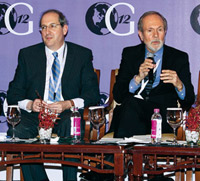
When industry and academia join hands knowledge acquisition gets promoted, education reaches occupational standard, and jobs penetrate remote domains. Leaders across intellectual strata, including eminent names from government, business and academia, gathered to attend ‘One Globe: 2012, Uniting Knowledge Communities’, held in New Delhi on February 3 and 4, 2012. The two-day conference was inaugurated by Mr. Kapil Sibal, Union Cabinet Minister for HRD & Communications as well as Information Technology, Government of India.

Home to nearly a quarter of the world’s population, South Asia is expected to add 40 per cent to world’s ‘working’ population in the next few decades. The conference was an initiative in this regard to create knowledge-based economy across South Asia, discussing and learning about one of the most pressing and practical challenges of the region.

The Taj Palace hotel, hosted the conference which covered the holistic gamut of education, economy and industry with topics such as, ‘The Role Of Education In Economic Development,’ and ‘A Global Perspective To Higher Education in India’. Click here to read more...

Read More IIPM Related Articles
Zee Business Best B-School Survey 2012
Prof. Arindam Chaudhuri's Session at IMA Indore
IIPM IN FINANCIAL TIMES, UK. FEATURE OF THE WEEK
IIPM strong hold on Placement : 10000 Students Placed in last 5 year
IIPM's Management Consulting Arm-Planman Consulting
Professor Arindam Chaudhuri - A Man For The Society....
IIPM: Indian Institute of Planning and Management
IIPM makes business education truly global
Management Guru Arindam Chaudhuri
Rajita Chaudhuri-The New Age Woman
IIPM B-School Facebook Page
IIPM Global Exposure
IIPM Best B School India
IIPM B-School Detail
IIPM Links
IIPM : The B-School with a Human Face

Monday, December 03, 2012

Tough time calls for smart decisions. When the global recession struck India, Tata Consultancy Services (TCS)took a look at its hr policies and practices to attract talent with optimum cost utilisation

In 2009, the global economy grappled with the most severe economic shock. The defaults on subprime mortgages (home loan defaults) led to recession in the U.S. which significantly affected Indian IT companies, TCS being one of them. U.S. clients took a cautious approach and postponed all outsourced projects, which led to financial crunch.

The biggest challenge for TCS in this economic downturn was to survive and remain competitive. The attrition rate recorded in TCS during this time was at 12.6 per cent in comparison to IT services attrition rate at 10.8 per cent. With rising manpower requirements due to heavy lay-offs, TCS was increasingly hiring non-technical science graduates, which posed a challenge for HR trainers to bring them on a common platform with other employees.

As the recession unfolded, it created the need for HR to take a fresh look at traditional models. Traditional model of HR focuses on administrative functions: benefits, compensation benchmarking, dispute resolution, employee grievance, and performance review and rules compliance. It was the time for management to understand the actual needs of the employees and the employers, and strike a balance, redesign the new roles of HR as per the need of company objectives and market environment.

So, what was the mantra adopted by the HR to ensure the company strategy and people strategy are in sync to create employee value proposition? Read more...

Read More IIPM Related Articles
Zee Business Best B-School Survey 2012
Prof. Arindam Chaudhuri's Session at IMA Indore
IIPM IN FINANCIAL TIMES, UK. FEATURE OF THE WEEK
IIPM strong hold on Placement : 10000 Students Placed in last 5 year
IIPM's Management Consulting Arm-Planman Consulting
Professor Arindam Chaudhuri - A Man For The Society....
IIPM: Indian Institute of Planning and Management
IIPM makes business education truly global
Management Guru Arindam Chaudhuri
Rajita Chaudhuri-The New Age Woman
IIPM B-School Facebook Page
IIPM Global Exposure
IIPM Best B School India
IIPM B-School Detail
IIPM Links
IIPM : The B-School with a Human Face

Monday, November 26, 2012

Effective communication by the business and HR collectively works the best towards damage control or mitigating a negative.

While recruiting during a turnaround, HR should be honest and transparent with the candidates on the key concerns within the organisation and what exactly the company is expecting from them. It has been noticed that, if handled well, the organisation can find appropriate people who find handling turnaround situations a great challenge and satisfying as a career opportunity. They can truly help organisations deliver.

Q. How can the HR best respond to the change in management during a turnaround as also when there is an external agency/person involved to set the mathematics right?
A. As there is no established rapport and trust that people have with the new management, HR can act as a bridge between the employees and the new management. Therefore, the responsibility of the department increases manifold.

Ensuring alignment between the new management and the business and people needs is the key to success and HR is best poised to deliver on this front.

Q. Please share with us a turnaround that has inspired you.
A. It was a situation when we had to turn around a company through a management change.

The new team had been hired, the top existing team had to be fired. The challenge was to ensure no unplanned people exit and integration of the team in the shortest time possible to ensure business transformation. The first part of the exercise was completed in a day. The jolt was absorbed and reduced through continuous daily communication over a fortnight, independently with the old and new teams and jointly with them. We ensured the induction and orientation of the new management and the team were handled by existing business teams and the HR department. After two months of the change, we conducted a trust building intervention with an external faculty. The communication on any people issue continued for six months, with lesser frequency with the time lapse.

We did not have a single loss of client or a team member. The market share of the business improved dramatically within a year. The business works as a one-unit cohesive team. Read more...

Thursday, November 22, 2012

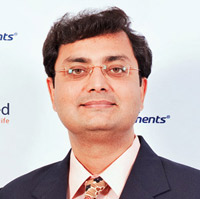
Sandeep Banerjee, Managing Director & CEO, Edenred India

.....Q. The youth today wants the best. What are the challenges you see for organisations here?
A. According to a UNICEF 2011 report, India is one of the youngest nations in terms of demographics. With globalisation and MNC entrants in India, youngsters are becoming global citizens. Today’s youth values communication, job enrichment, career and succession planning, over increase in compensation. Firms too realise hikes can be easily replaced by competitors and intangible benefits is the differentiating factor.

Q. What do you expect from HR?
A. I expect the basics with reference to HR operations, as routine elements of the HR function needs to be ensured. HR needs to start contributing more meaningfully to sense people issues proactively. The key points here are feeling the pain, emotionally connecting, getting to the root of discordant behaviours, aligning with the leadership team towards finding enduring solutions and effectively executing for enduring business impact and organisational and cultural transformation.

Q. How can the HR needs be best communicated to the CEO?
A. There is no substitute to in person conversations with facts and data. Trust and transparency between the duo, along with the rest of the leadership team, is the main determinant of free and fair communication, thus leading to quicker response times. Read more..


Read More IIPM Related Articles
Zee Business Best B-School Survey 2012
Prof. Arindam Chaudhuri's Session at IMA Indore
IIPM IN FINANCIAL TIMES, UK. FEATURE OF THE WEEK
IIPM strong hold on Placement : 10000 Students Placed in last 5 year
IIPM's Management Consulting Arm-Planman Consulting
Professor Arindam Chaudhuri - A Man For The Society....
IIPM: Indian Institute of Planning and Management
IIPM makes business education truly global
Management Guru Arindam Chaudhuri
Rajita Chaudhuri-The New Age Woman
IIPM B-School Facebook Page
IIPM Global Exposure
IIPM Best B School India
IIPM B-School Detail
IIPM Links
IIPM : The B-School with a Human Face

Thursday, November 01, 2012

The Sharpest Arrow in Ceo’s Quiver

Q. How can HR link itself to the overall business strategy?
A. To be involved at the start of the strategy development, HR has to understand where the organization is going and what will that mean for its skills and talent needs, e.g., how many people will retire. It should also understand what skills will they take with them; the expansion plans; what skills will that take; the business trends and the impact they will have on skill needs.

Q. How can a CEO participate in making efficient HR processes?
A. CEOs need to use their role to help the organisation understand the critical contribution of HR to business’ success. But they also want senior HR executives to be more assertive in demonstrating their value and demanding their issues be recognised. CEOs believe senior HR executives can and should drive their agenda forward by ensuring they are business savvy, relevant, trusted and focused on issues that matter. HR needs to pound the table more as their issues get ignored in the heat of the battle.

Q. Which are the key strategic areas where involvement of HR becomes mandatory?
A. CEOs need leadership that is skilled, available and ready to act. HR needs to play a leadership role in identifying and developing talent. CEOs are looking to HR to help identify the behaviours and skills that will drive its productivity and success. Now that economic recovery is underway, most CEOs expect HR to lead a renewed focus on both talent management and succession planning.

Creating the employer brand
HR plays a key role in connecting culture with objectives and defining and communicating what makes its organisation a great place to work.

4 generations at the workplace
CEOs want HR to help predict and manage the impact of four generations at the workplace.

Social media
HR must have a solid grasp on how to use social media to communicate with and recruit employees.

Trend analysis
CEOs expect HR to forecast and analyse trends that will impact the business.Click here to read full interview..

Read More IIPM Related Articles
Zee Business Best B-School Survey 2012
Prof. Arindam Chaudhuri's Session at IMA Indore
IIPM IN FINANCIAL TIMES, UK. FEATURE OF THE WEEK
IIPM strong hold on Placement : 10000 Students Placed in last 5 year
IIPM's Management Consulting Arm-Planman Consulting
Professor Arindam Chaudhuri - A Man For The Society....
IIPM: Indian Institute of Planning and Management
IIPM makes business education truly global
Management Guru Arindam Chaudhuri
Rajita Chaudhuri-The New Age Woman
IIPM B-School Facebook Page
IIPM Global Exposure
IIPM Best B School India
IIPM B-School Detail
IIPM Links
IIPM : The B-School with a Human Face

Thursday, October 25, 2012

Anisha Singh (Founder and CEO, mydala.com)

Continued...“We do not want our employees to feel that they are coming to office but want them to feel that they are a part of the family,” she says with a smile. She points out that there can not be any progress unless you challenge yourself. “I do not think there is any entrepreneur who has not had challenges and if you are not challenging yourself, you are not at the place where you should be.”

Buoyed by the success, Mydala.com plans to expand in the future and make its presence felt in 32 cities. “Besides increasing our presence in more cities, we are also working on creating zones in cities. We have been trying to incorporate customer feedback over last one-and-a-half-year and will come out with version 2 of our website soon,” says Mrs. Singh, who was recently conferred the ‘Leading Woman-Owned Innovative Project’ for 2010 by the Women Leaders in India Awards.

When it comes to her quality as a team leader, this enthusiastic businesswoman candidly describes herself as an “impulsive and impatient” person. “When I want something, I want it now,” however, she believes that there is a certain value system she goes by and likes to be the leader of the team while being a part of it.

On a concluding note, Mrs. Singh sends out a message to all new entrants: “Test the waters before you decide to jump in to it as the view from rose-tinted glasses may not always give you the true picture.” An advice worth its weight in gold! Click here to read more...

Read More IIPM Related Articles
Zee Business Best B-School Survey 2012
Prof. Arindam Chaudhuri's Session at IMA Indore
IIPM IN FINANCIAL TIMES, UK. FEATURE OF THE WEEK
IIPM strong hold on Placement : 10000 Students Placed in last 5 year
IIPM's Management Consulting Arm-Planman Consulting
Professor Arindam Chaudhuri - A Man For The Society....
IIPM: Indian Institute of Planning and Management
IIPM makes business education truly global
Management Guru Arindam Chaudhuri
Rajita Chaudhuri-The New Age Woman
IIPM B-School Facebook Page
IIPM Global Exposure
IIPM Best B School India
IIPM B-School Detail
IIPM Links
IIPM : The B-School with a Human Face

Wednesday, October 17, 2012

Paras Ajmera (Director – Operations & HR, Financial Technologies Group) delves into The Nitty Gritties for Creating a ‘Trading Platform of Choice’ at this IP Company Powered by Knowledge, in a Q&A with Aditi Sharma Kalra

Q. With an 80 per cent market share, what has led to the Group’s rapid growth?
A. Technology is the common thread that binds all the Group companies. The Group has leveraged the advantages of exchange traded products and added value by creating new exchanges, new markets, new products and investing in strategic geographies, while focusing on promoting an interconnected and sophisticated marketplace. This allows us to build unprecedented shareholder value through a non-linear business model. It also helps us democratise global trade, transform economies, and drive inclusive and equitable growth, in India as well as globally.

Q. What kind of talent does the employee base here comprise?
A. We have a diverse employee base with myriad backgrounds and skill sets. Our financial and domain knowledge experts complement the efforts of the technology experts. We derive support from the repertoire of unmatched experience and expertise of our leadership, and members of our Board of Directors and Advisory Board. We believe that an organisation’s most invaluable resource is its people. Our intellectually-stimulating work culture and learning opportunities have helped us retain people. Over 50 per cent of our employees have been with us for over five years and our attrition rate is amongst the lowest in the industry. Click here to read more...

Read More IIPM Related Articles
Zee Business Best B-School Survey 2012
Prof. Arindam Chaudhuri's Session at IMA Indore
IIPM IN FINANCIAL TIMES, UK. FEATURE OF THE WEEK
IIPM strong hold on Placement : 10000 Students Placed in last 5 year
IIPM's Management Consulting Arm-Planman Consulting
Professor Arindam Chaudhuri - A Man For The Society....
IIPM: Indian Institute of Planning and Management
IIPM makes business education truly global
Management Guru Arindam Chaudhuri
Rajita Chaudhuri-The New Age Woman
IIPM B-School Facebook Page
IIPM Global Exposure
IIPM Best B School India
IIPM B-School Detail
IIPM Links
IIPM : The B-School with a Human Face

Friday, October 12, 2012

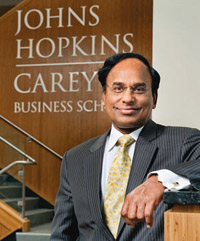
Indranil Das talks to Professor Yash Gupta, Inaugural Dean of Johns Hopkins University, Carey Business School, Regarding The Changing Academic trends in B-Schools in The US

Q: Why is it happening only with the Indians, why don’t we see people from other countries such as China accomplishing the same, as they too stepped into academics when India did?
A: Well, that is correct. A large Chinese population has been residing in the US for generations but the problem is of language. The language barrier is a huge problem when it comes to leadership roles. Secondly, I think many Chinese want to go back home as there are better opportunities in their country. Perhaps, Indians do the exact opposite because leadership opportunities in Indian academia are less.  

Q: You have been a big champion of diversity in all spheres and business too. Any particular reason you see that diversity is important?

A: Diversity is a fundamental thing for any society, never mind the US because what it provides you with is an opportunity to learn from different perspectives. Last century what we saw was a specialisation of one kind. This century is different. You need a different kind of skill set for more creative solutions. When you look at America, the competitive advantage is of technology and we hold a monopoly on the same. Whereas, India’s competitive advantage is that it follows suit with the development of software et al. In short, there are three things which diversity teaches us: the ability to understand and adapt, two it gives you better understanding of global problems, third, it really prepares you for uncertainty in the market. Click here to Continue...

Read More IIPM Related Articles
Zee Business Best B-School Survey 2012
Prof. Arindam Chaudhuri's Session at IMA Indore
IIPM IN FINANCIAL TIMES, UK. FEATURE OF THE WEEK
IIPM strong hold on Placement : 10000 Students Placed in last 5 year
IIPM's Management Consulting Arm-Planman Consulting
Professor Arindam Chaudhuri - A Man For The Society....
IIPM: Indian Institute of Planning and Management
IIPM makes business education truly global
Management Guru Arindam Chaudhuri
Rajita Chaudhuri-The New Age Woman
IIPM B-School Facebook Page
IIPM Global Exposure
IIPM Best B School India
IIPM B-School Detail
IIPM Links
IIPM : The B-School with a Human Face

Wednesday, October 10, 2012

Health is wealth !!

Continued...Since people’s goals are determined by their unique sets of circumstances, values, belief systems, family background, education, work experience, and personality styles, organisations need to understand these as well as their goals. For this, we have to return to the humanistic psychologists – including or perhaps especially, the much-maligned Maslow. He suggested that the needs at the bottom of the list were fundamental goals and that only about one per cent of the population would ever be self-actualising. Critical to Maslow’s ideas, and important to managers using his theory, is that no one stays at one level for a long time. One constantly strives to move up the hierarchy while, forces outside one’s control may try to push him/her down.

One of the most powerful things managers can do is ascertain where a person is located, to determine an effective motivator; in other words, to match horse with course. However, an organisation’s real goal is to help people obtain the skills and knowledge that will push them up the hierarchy permanently. People who have their basic needs met become much better workers. They are able to concentrate on fulfilling the leadership vision instead of worrying about making ends meet. Appealing as Maslow is, we should heed the words of Peter Drucker: “As a want (need) approaches satiety, its capacity to reward, and with it its power as an incentive diminishes fast.”

But of course, we cannot rule out that a person may be highly motivated to succeed but may not have the ability or role clarity to do so. These are important management issues to resolve. Read More...

Read More IIPM Related Articles
Zee Business Best B-School Survey 2012
Prof. Arindam Chaudhuri's Session at IMA Indore
IIPM IN FINANCIAL TIMES, UK. FEATURE OF THE WEEK
IIPM strong hold on Placement : 10000 Students Placed in last 5 year
IIPM's Management Consulting Arm-Planman Consulting
P rofessor Arindam Chaudhuri - A Man For The Society....
IIPM: Indian Institute of Planning and Management
IIPM makes business education truly global
Management Guru Arindam Chaudhuri
Rajita Chaudhuri-The New Age Woman
IIPM B-School Facebook Page
IIPM Global Exposure
IIPM Best B School India
IIPM B-School Detail
IIPM Links
IIPM : The B-School with a Human Face

Monday, October 08, 2012

US OFFICIAL LIST OF TERRORISTS: AND AN ANALYSIS OF WHY YOUR NAME COULD FEATURE THERE

January 20, 2009, Bush leaves the White House; but before that, he ‘updates’ the ‘official’ US terrorists list. 

Corporation being preferentially allocated to China by the Chinese government.” That then “would weaken the ability of the US to influence the oil and gas supplies of the Nation through companies that must adhere to United States laws.” The CNOOC deal therefore threatens “to impair the national security,” and “the President should initiate immediately a thorough review of the proposed acquisition, merger, or takeover.” From Dubai Ports to Singapore’s Temasek, all investments by foreign countries have faced similar opposition in the US.

Clearly, when the US drains out oil from Iraq, then it’s not a problem the Pope should worry about, but if some other country goes in for a legal acquisition of a powerful US company, then Nostradamus inferences are redrawn to ensure that such moves are nipped even before the bud is born. If Iran is the latest to face the brunt of Mr.Bush’s rottweiler-like attitude – who wants the world to stop trading with Iran completely – what is not often told is the fact that there are several Israeli companies, like Medent [quoting Steve Rodan, Jerusalem Post Service] who do brisk business running up to hundreds of millions of dollars at the same time with Iran.

Bush might be leaving on January 20, 2009; but has ensured that NCTC stays in absolutely safe hands. The current NCTC Director, Michael E. Leiter, is pretty well qualified. One hears that just a few handful of years back, Mr. ‘well qualified’ Leiter served as the Dy General Counsel and Assistant Director of the US President’s Commission on “US Intelligence Capabilities Regarding Weapons of Mass Destruction!” Gotcha Elvis!!! Rock on!!!


Source : IIPM Editorial, 2012.

For More IIPM Info, Visit below mentioned IIPM articles.

 
IIPM : The B-School with a Human Face

Saturday, October 06, 2012

Satyen Gupta, former Principal Advisor, TRAI

Telecom Regulatory Authority of India (TRAI) played a pivotal role in the great Indian telecom success story. The body keeps a close watch on the quality of services offered by the telecom operators to millions of wireless subscriber. However, there is little that the regulator can do when it comes to implementation of these norms on the ground level. Former Principal Advisor to TRAI Satyen Gupta spoke to Akhilesh Shukla about the MNP and regulators role in implementation of QoS norms.

B&E: How you will rate the present QoS of the telecom services in India?
SG:
The QoS of the telecom operators has never been upto the mark. TRAI has not enough teeth to force the telecom operators to match the QoS benchmark laid by the regulator. Operators also did not see any incentive in investing in upgradation and maintenance of quality of services, due to the falling margins. Besides, issues related to building up a new base station were always there. Operators face several hurdles in putting up base stations, especially because of the rules and unrealistic taxes laid out by the local development bodies. Improper spectrum management has lead to a crunch leading to network congestion. But now MNP will force operators to improve QoS.

B&E: Some of the telecom operators do not meet the quality of service norms in some circles. What is the action that a regulator can take in that case?
SG:
Telecom regulator TRAI has a very little role to play when it comes to implementation of QoS norms. The maximum that the body can do is to bring out the QoS report in public, making consumers aware of the telcos not meeting the minimum norms set by the regulator. It can also recommend cancellation of license, but the final call lies with the Department of Telecom, the body which issue licenses. TRAI can penalise the operators also, but it is a cumbersome process as the regulator has to court of law.

B&E: After 3G and MNP, what is the next step you see in Indian telecom?
SG:
3G spectrum auction and role out of 3G services by private and PSU operators was one of the biggest landmarks in the Indian telecom success story. Implementation of MNP would be another milestone in the second largest telecom market. Now, it is the right time for the country to look forward for Next Generation Networks and Next Generation Access technology. Both the technologies will provide better and faster internet speed to subscribers. It would also be helpful in bridging the digital divide between the rural and urban part of the country.


Source : IIPM Editorial, 2012.

For More IIPM Info, Visit below mentioned IIPM articles.

 
IIPM : The B-School with a Human Face


Friday, October 05, 2012

MOVIE PRODUCTION HOUSES: INVESTOR DISINTEREST

Soon after the Economic Liberalisation, It became almost Impossible to lose Money in the Movie Making Business due to The Rise of Multiple Revenue Streams. However, Despite Delivering Blockbusters, Dalal Street largely remains Disinterested in These Stocks.
 
One of the possible reasons for investors turning blind eye is the lack in consistency of cash flows. In the notoriously fickle business of movie making, consistency in profits is what would attract investors. However, our production houses have time and again failed to explain the exact nature of profits. Mahendra Swaroop, Vice President, Indian Venture Capital Association (IVCA), says, “Although listed, Indian movie production houses are mostly non-corporatised. They have no formidable approach of tracking profits except for box office performance because they are not present in the end to end value chain.” Compare this with the case in US and the US investors share an everlasting relationship with Hollywood. The combined market cap of Walt Disney, Time Warner and Newscorp stands at a staggering $150 billion. Walt Disney alone is valued at $64 billion, around 5 times the size of the entire Indian media and entertainment industry. Even the recent MGM collapse, despite its James Bond franchise, is purely because of visible fundamental debt and loss aggregation issues.

In fact, globally, media and entertainment is a relatively lucrative sector for all kinds of investors ranging from private equity to individual ones. But back home in India, the case is quite to the contrary. The total market cap of stocks listed on the BSE is $1 trillion. Out of this, the market cap of media and entertainment companies is roughly 1.1% amounting to a mere $11 billion. And this is where the opportunity lies for Indian movie production houses, which have a great future provided they decide to be present in the entire value chain (as against the present form where the distribution rights, music rights et al are dispersed). This will help investors too in understanding and realising the true worth of the scrip and the company– a traditional happy ending for both. Till then, our production houses will continue to languish in the forgotten alleys of Dalal Street.


Source : IIPM Editorial, 2012.
For More IIPM Info, Visit below mentioned IIPM articles.
 
IIPM : The B-School with a Human Face

Monday, September 10, 2012

Lack of long term strategies

Post the frenzied activity that begins in any sector opened up in the Indian Economy, many entrants, including the larger ones, lose out due to lack of long term strategies and inability to adapt to business dynamics. Ultimately, market forces take them off road, putting paid to all the aspirations that convinced them to enter the sector in the first place

The same has been the case in the insurance sector, where the state-owned Insurer LIC stands tall among its counterparts with close to 73% market share (as of September 2010) and 22 players are fighting for the remaining 27% market share. Clearly the market hasn’t picked up like it was expected (one wonders about the possible scenario when the new banking licences are issued, currently sought by a number of players). There were even forays made by a number of players in the IT and BPO space, but players like L&T & Birla failed to make a mark. For that matter, even steel has proved to be an El Dorado in India. Some Indian steel players may beg to disagree, but ask an Arcelor Mittal or a Posco and brace yourself for ayes galore! Players entering the power sector face innumerable constraints in terms of infrastructure, raw material, labour, et al, ever since they entered the sector to take advantage of the new electricity policy. The list goes on.

The fact is that new entrants come into the sunrise sectors solely on the basis of potential. However, only a few years later, they realise that success in the respective sector may be too elusive due to competition, market readiness, regulatory hurdles, infrastructure constraints, et al. If they have gone too far to start afresh from square one, they are left with no option but to move out. Resources can sustain them to an extent, but industry dynamics can take no time to overwhelm them if they are not prepared. And then there is no sense in putting more good money where the bad disappeared! B&E provides an in depth analysis into four major sectors that are giving every indication of being future El Dorados, even as the players remain engaged in a relentless battle in the hope that they won’t be the chosen ones for capitulation.


Source : IIPM Editorial, 2012.
For More IIPM Info, Visit below mentioned IIPM articles.
 
IIPM : The B-School with a Human Face

Saturday, September 08, 2012

Feed me right!

Whether or not your baby will grow up to be an obese Adult, is partly in your hands!
 
Every son or daughter would vouch for the fact that one of the primary aims of parents, especially mothers, is to stuff them with all possible food available, world hunger and poverty be damned! And as a helpless tot, all you can do is burp. But here is something they would love their parents to read; now if only they took time off from making all those meaningless noises to get the li’l one’s attention! Researchers at the Institute of Child Health, London, have reported that 20% of adult obesity is caused due to this attitude and the practice of over-feeding in infancy.

Throughout the years, doctors have been voicing the benefits of breast-feeding, and besides the reasons of higher immunity being developed through breast-feeding, research now reveals that with bottle and formula feed, the baby ends up consuming more food than is required, which in turn results in them developing larger appetites. And with the development of a large appetite, there are more chances of the baby growing into an over-weight adult.

Priya Vashisht gave birth to a baby boy five months ago. After two months of rest, she rejoined work. On enquiring about her baby’s food routine, Priya said, “I had switched to bottle-feed after three months of my delivery. Breast-feeding is a tedious process. Also, now that I’m in office during the day, it’s easier with the bottle. And when we have easier options, why not?” Priya isn’t the only woman with this thinking, for there are many more like Priya who prefer to switch to easier options of feeding the baby, much sooner than the recommended period. 


Source : IIPM Editorial, 2012.
For More IIPM Info, Visit below mentioned IIPM articles.
 
IIPM : The B-School with a Human Face